Quickfire Questions for Young Minds
A good children’s quiz should feel less like an exam and more like a treasure hunt. The best questions open little doors into science, geography, animals, history and everyday life, giving young readers a chance to build confidence as well as knowledge. If a child learns that the Earth spins, that penguins are birds and that the capital of Wales is Cardiff, they are not simply collecting facts; they are making sense of the world around them.
Start with the kind of question that makes children look at familiar things in a new way. What colour are the leaves on most healthy trees in summer? Green, because chlorophyll helps plants make food from sunlight. Why do we have day and night? Because the Earth spins on its axis, so different parts of the planet face the Sun at different times. These are simple ideas, but they are powerful ones, and once children grasp them they begin to see that science is not a separate subject hidden in a classroom. It is there in the sky, in the garden and even in the sandwich they are eating for lunch.
Animals are another reliable source of fascination, especially when the answers are surprising. Which mammal can fly? The bat, which uses its wings to move through the air in a way no other mammal can. Which animal is the largest on Earth? The blue whale, a sea giant whose size is hard to imagine until you realise it can be longer than a bus. What do you call a baby frog? A tadpole. Questions like these work well because they reward attention to detail, and children often enjoy facts that feel a little bit odd, especially if they can then repeat them to someone else at the dinner table.
Geography questions bring the wider world into the room, and they are especially useful because they connect places with everyday life. What is the capital city of the United Kingdom? London. What is the capital of Scotland? Edinburgh. What do we call the imaginary line that circles the middle of the Earth? The Equator. Even younger children can enjoy learning that the tallest mountain on land is Mount Everest, while the deepest point in the ocean is the Challenger Deep in the Pacific Ocean. These are the kinds of facts that make maps feel less flat and more alive.
Food and everyday objects can be just as interesting as faraway places. How many sides does a triangle have? Three. How many days are there in a leap year? Three hundred and sixty-six. What gas do humans need to breathe? Oxygen. What do bees make? Honey. Simple questions like these are useful because they link knowledge to things children see every day, from birthday cakes to the weather outside the window. They also remind young quizzers that general knowledge is not only about grand events and famous names; it is about understanding ordinary life properly.
History questions can be made child-friendly without losing their value. Which famous diary was written by Anne Frank? A personal diary kept while she and her family were hiding during the Second World War. Who was Queen Victoria? A British monarch who ruled for much of the nineteenth century. What do we call a person who studies old things and past civilisations? An archaeologist. Children do not need a long lecture to begin enjoying history; they often only need a single memorable fact to spark interest. Once that happens, they start asking their own questions, which is usually the best sign that learning is working.
A well-balanced quiz should also include language questions, because words are as much a part of general knowledge as rivers or planets. What do we call a word that means the opposite of another word? An antonym. Which is correct: “an apple” or “a apple”? “An apple”, because the word begins with a vowel sound. What punctuation mark shows a question? A question mark. These are small building blocks, but they help children read, write and speak with more confidence. A child who enjoys words often becomes a child who enjoys asking better questions, and that habit can last a lifetime.
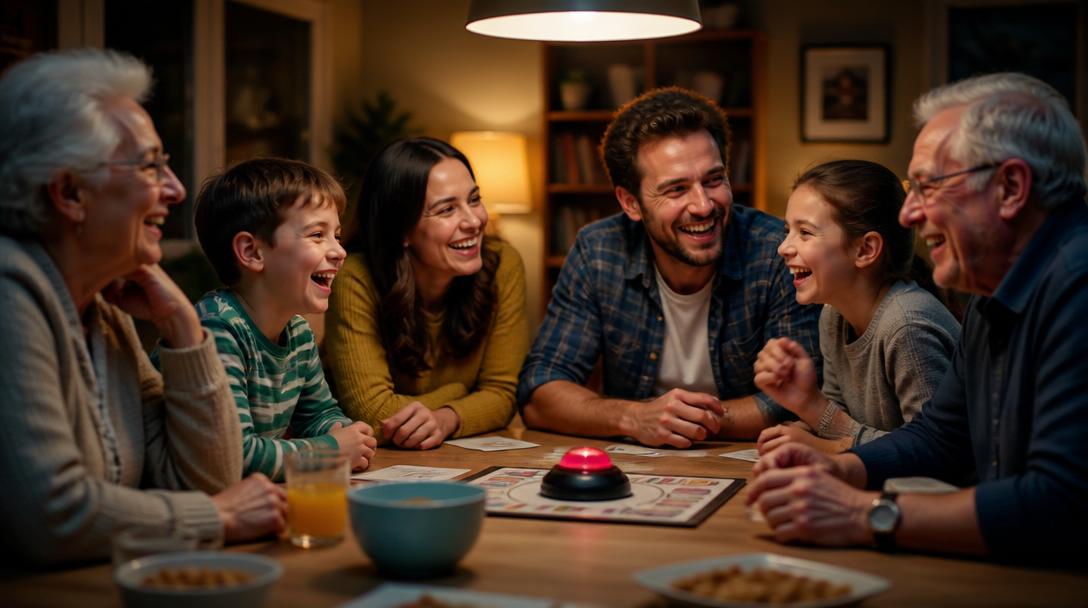
The best thing about a children’s general knowledge quiz is that it can be played anywhere. It works in the car, after school, on a rainy weekend or at the kitchen table while the kettle boils. It can be competitive, but it does not have to be; the real aim is to keep curiosity alive and make learning feel lively rather than forced. If a child remembers that the moon does not make its own light, that a spider has eight legs and that the capital of Wales is Cardiff, then the quiz has done more than entertain. It has helped build a sharper eye, a better memory and a stronger sense that the world is full of things worth knowing.