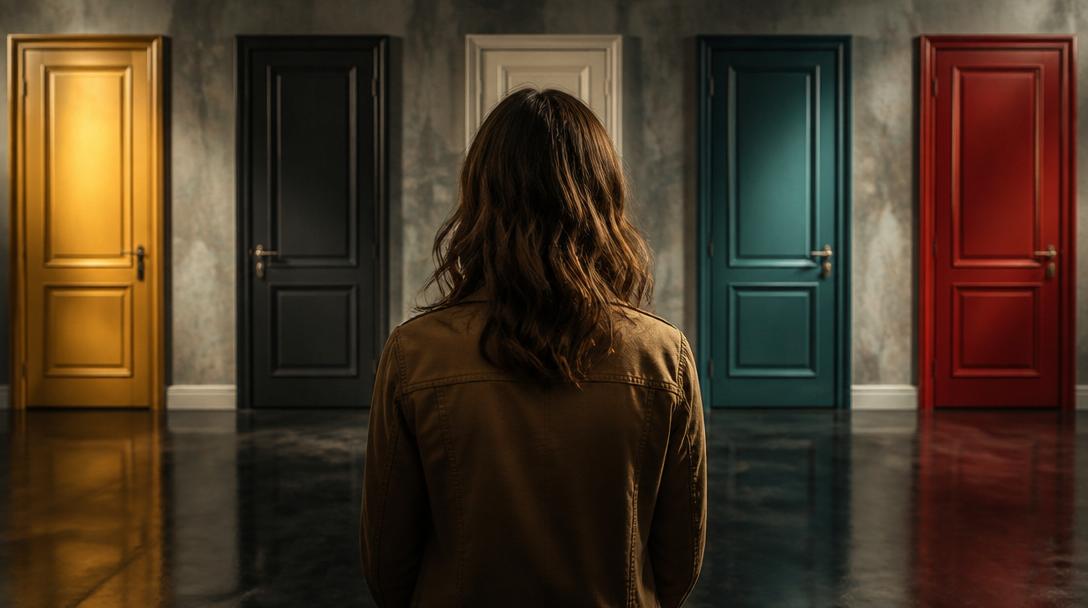
What Your Choice Reveals About You
Personality quizzes are popular for a reason: they turn ordinary preferences into a mirror. Pick a seaside cottage or a city penthouse, a dog or a cat, tea or coffee, and many people feel there is a hidden message in the answer. The appeal is not really about prophecy, but about recognition, since a neat choice can seem to capture something familiar and true.
Psychologists have long been interested in how preferences relate to personality, although the relationship is rarely simple. In everyday life, what you choose can point to broad tendencies such as openness to experience, sociability or a preference for structure. Someone drawn to bold colours and lively settings may be signalling a taste for stimulation, while another person repeatedly choosing calm, orderly options may be showing a wish for predictability and control.
That does not mean a single answer can define a person. A quiz choice is usually a snapshot, shaped by mood, context and the way a question is framed. If you choose a quiet bookshop over a crowded bar, it may reflect introversion, but it might just mean you are tired, or that you had a long week and want peace rather than conversation. The same person can answer differently on different days, which is why the most useful quizzes are the ones that treat results as clues rather than verdicts.
Still, the pattern behind repeated choices can be informative. People often return to options that feel psychologically safe, and that sense of safety can reveal a great deal. A person who consistently prefers familiar routes, classic styles and clear instructions may be comfortable with routine and less keen on uncertainty, whereas someone who gravitates towards novelty, improvisation and change may enjoy flexibility and experimentation. Neither approach is better, but each suggests a different way of handling the world.
The same idea applies to how people respond to social choices. If a quiz asks whether you would host a large dinner party or spend the evening with one close friend, the answer may hint at your social energy. Some people recharge in groups, enjoying the buzz of exchange and the sense of shared attention, while others prefer smaller circles where conversation can go deeper. That difference is one reason personality quizzes resonate so strongly: they translate a broad trait into a vivid, everyday scene.
There is also a subtler layer to these questions. Many choices are really about identity, not just taste. Selecting a practical coat over a fashionable one, for instance, may say something about how a person balances image against usefulness. Choosing the scenic route instead of the quickest one can suggest a greater appetite for experience, or simply a refusal to rush through life. These decisions often carry a small moral flavour, because people infer character from what seems sensible, indulgent, cautious or adventurous.
Quiz-makers know that the wording of a question can nudge the answer. A choice between “spontaneous” and “careful” sounds different from a choice between “free-spirited” and “reliable”, even if the underlying distinction is similar. That is why personality quizzes can feel remarkably accurate one moment and slightly absurd the next. They are not measuring some hidden essence in a laboratory sense; they are using language to make people reflect on how they see themselves.
The best personality quizzes work because they encourage that reflection. When someone pauses over a choice, they are often doing more than picking an answer. They are comparing the person they are, the person they want to be and the person they think others expect to see. In that sense, the real value of the quiz lies in the conversation it starts in the reader’s head, where instinct, memory and self-image all compete for attention.
That is why the most revealing answer is not always the one that sounds the most dramatic. A preference for a tidy desk, a well-worn novel or an early night may say just as much as a taste for risk or glamour. Human character is built from habits as much as from headline moments, and personality quizzes capture that truth in miniature. What you choose may not tell the whole story, but it often tells enough to make you look twice.