Family Trivia Night for Every Generation
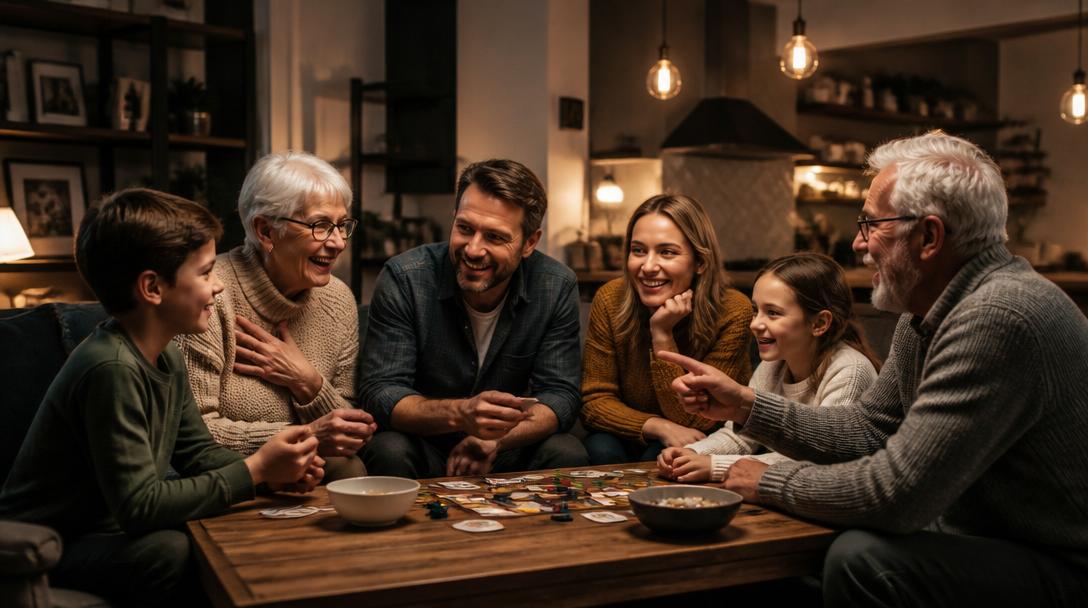
The appeal of a family trivia night is that it can be as relaxed or as competitive as you like. A good quiz gives grandparents, parents and children something to talk about, and it often brings out the sort of knowledge that never appears in school reports. One person may know the capital of Australia, another may remember the cast of a beloved children’s programme, and someone else may suddenly reveal a talent for naming birds, flags or football grounds. That mix is what makes the evening work: it is less about proving who is smartest than about creating a shared game that feels fair to every age group.
The smartest family quizzes are built on variety. If every question leans towards one generation, the room quickly loses energy, so it helps to move between subjects that different people may have picked up in different parts of life. Children often excel at newer pop culture, modern gaming and school-based topics, while adults may have the edge on history, geography or current affairs. Older relatives can often surprise everyone with knowledge of music from earlier decades, classic television or the names of long-ago prime ministers, and those moments are usually the ones people remember most.
Question style matters just as much as subject choice. Straight factual questions are useful, but a family quiz becomes more enjoyable when it includes picture rounds, sound rounds and light-hearted guesswork. A round on family-friendly film characters, famous landmarks, household objects from the past or common sayings can keep different generations engaged without making the younger players feel out of their depth. It also helps to include a few questions with more than one route to the answer, so that someone who cannot recall a precise date may still get there by logic, deduction or a good educated guess.
Keeping the tone warm is essential. Family trivia night should feel playful rather than punishing, which means the questions ought to challenge without humiliating. If the game is too difficult, younger children switch off; if it is too easy, the adults stop paying attention. The sweet spot is a set of questions where confidence can change hands from round to round, so that a child who knows every answer about animals can meet a grandparent who is unbeatable on royal history or classic quiz subjects. That ebb and flow keeps the room alive and gives everyone a reason to stay involved.
It is worth thinking about pacing too. Short rounds tend to work better than one very long block of questions, especially when younger children are involved. A quiz can move from a quick general knowledge round to a picture round, then on to a theme such as food, sport, literature or places in the United Kingdom. Mixing the format helps maintain attention and gives people time to reset between rounds, which is useful in a household where some players may want constant action while others need a brief breather. A good host can keep the evening moving without making it feel rushed.
Fairness is another reason family trivia nights succeed when they are thoughtfully put together. Teams work better than a free-for-all when there is a wide age range, because they allow knowledge to be shared across generations. A child may spot the right answer first, while an adult can remember the spelling or the exact detail that finishes the job. That collaborative element also removes some of the pressure from younger players, who can contribute without feeling that every answer has to be perfect.
The best questions often draw on everyday life as much as on formal knowledge. Asking about famous breakfasts, common road signs, British traditions, weather, pets, children’s literature or well-known songs can make the quiz feel familiar and accessible. At the same time, a few slightly trickier questions keep older players interested and stop the game becoming too predictable. A well-balanced set might ask who wrote The Hobbit, what colour a standard traffic light shows for stop, or which planet is known as the Red Planet, moving from cultural memory to practical knowledge and back again.
There is also a social value in letting children see adults think aloud. In everyday life, grown-ups often seem to know everything, or at least claim to, but a quiz exposes the truth that memory is patchy for everyone. That can be reassuring for children, who learn that being uncertain is part of learning, and entertaining for adults, who may have forgotten how much fun it is to puzzle over an answer together. The result is a game that is as much about conversation as competition, with the added bonus that even wrong answers can be funny if they are delivered in the right spirit.
A family trivia night works best when it feels rooted in the people around the table. Questions about favourite holidays, well-known family sayings, local landmarks or childhood favourites can make the game feel personal without becoming too private. That sense of recognition is powerful, because it turns a quiz from a pile of facts into an event that belongs to the household. By the end of the evening, the score may matter less than the stories, the arguments over answers and the moment when someone unexpectedly gets the final question right.