Hollywoods Golden Age on the Silver Screen
The golden age of Hollywood was not simply a period of old films; it was a machine that turned actors into legends and studios into empires. From the 1930s through the 1950s, the major film companies controlled production, distribution and often the careers of the performers under contract. Audiences might have known the studio logo before they knew the star, whether it was MGM’s lion, Warner Bros’ shield or Paramount’s mountain. That system created a recognisable style that still feels instantly cinematic, with polished lighting, carefully written dialogue and stars who seemed larger than life.
Part of the enduring appeal lies in how many of those films became part of everyday culture. Casablanca, released in 1942, remains one of the most quoted and revisited films of the era, while The Wizard of Oz gave generations the unforgettable moment when sepia-toned Kansas gives way to the Technicolor splendour of Oz. Gone with the Wind, first released in 1939, became one of the most famous and commercially successful films of its time, while Citizen Kane, though not a box-office triumph on release, later earned a reputation as one of cinema’s great technical and narrative achievements. For a nostalgia quiz, these titles are useful because they are not merely famous; they have lodged themselves in the public imagination through repeated screenings, references and homages.
The stars themselves were as carefully crafted as the films. Humphrey Bogart, Audrey Hepburn, Cary Grant, Bette Davis, James Stewart, Katharine Hepburn, Ingrid Bergman and Clark Gable each brought a distinct screen presence that audiences came to recognise at once. Their appeal was not just beauty or charm, but a sense of style that seemed both polished and personal. Studios protected that image closely, sometimes shaping publicity, selected roles and even off-screen behaviour to fit an ideal. That helps explain why trivia questions about the era often feel so satisfying: a single still image, a voice or a famous line can be enough to summon the whole world.
Many of the most memorable moments from the era came from genres that were made with remarkable confidence. Musicals flourished with films such as Singin’ in the Rain and An American in Paris, while film noir brought shadowy cities, moral uncertainty and unforgettable performances in titles like Double Indemnity and The Maltese Falcon. Westerns provided another pillar of the studio system, with John Ford’s Stagecoach helping to establish the modern form of the genre and John Wayne becoming one of its most enduring figures. These films were made for broad audiences, yet they often carried a precision and inventiveness that still rewards close watching.
The Golden Age also coincided with major changes in the way films were made and seen. Technicolour grew more common in the 1930s and 1940s, giving filmmakers richer palettes for fantasy and spectacle, while sound had already transformed storytelling after the late 1920s. By the 1950s, television had begun to challenge cinema’s dominance, and the old studio order was under pressure from legal and cultural change. That shift did not end the era’s influence; rather, it preserved it as a kind of benchmark, a time to which later filmmakers would return for inspiration, parody or reverence.
For many viewers, nostalgia for Hollywood’s Golden Age is tied to the experience of watching it on television, in revival houses or on home video rather than first-run cinema. Turner Classic Movies, the BBC and countless local screenings helped keep the repertoire alive for people who were born long after the studio era’s peak. The films also survived because they are surprisingly adaptable to trivia play: a question about the composer Max Steiner, the director Alfred Hitchcock, the costume design of Edith Head or the debut of a young Marilyn Monroe can open a door into a much larger story. Each answer is a reminder that old Hollywood was an industry of specialists as well as stars.
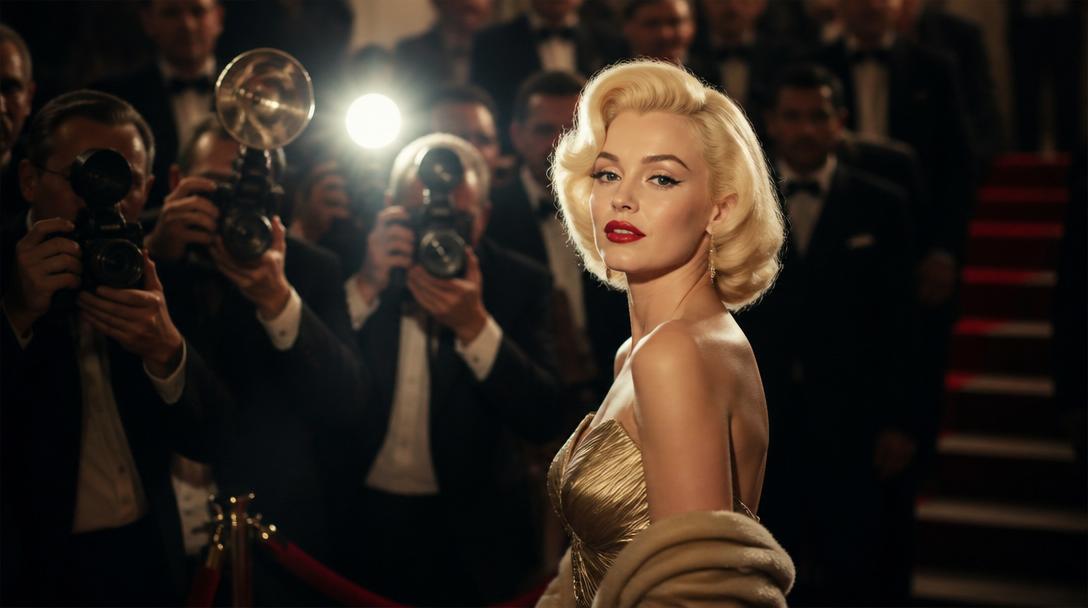
That is why the golden age still feels so potent in the present. It offers elegance without irony, melodrama without apology and a sense of craftsmanship that modern viewers can still admire even when the fashions have long passed. The best nostalgia quizzes do more than ask whether you remember a title; they ask whether you can recall the mood of an age when cinema was the dominant popular art form. If you can picture the spotlight, hear the orchestra and recognise the face emerging from the darkness, you are already halfway back to Hollywood as it once was.