Retro Quiz Memories From a Lost Britain
There is a particular pleasure in a retro general knowledge quiz because it asks for more than facts. It asks whether you have lived through a Britain of three television channels, paper bus timetables and coins you could identify by touch in the dark. Younger readers can certainly know the answers, but those born before 1970 often carry the memories that make the clues feel immediate rather than historical.
That is why these quizzes have such an easy pull. They do not rely on obscure academic knowledge so much as on shared habits that were once ordinary and are now faintly exotic. A question about teletext, for instance, is not just about an old television service, but about waiting for page 888 or using the slow, blocky pages to check football scores, weather or holiday prices. Likewise, a prompt about dial telephones or phone boxes can conjure the tiny ritual of spinning a number and hearing each click as a distinct part of the call.
The appeal also lies in the way memory works. Many people can remember the name of a soap powder or the face on a packet of biscuits long after they have forgotten the details of last week’s news. Retro quizzes tap into that store of practical, everyday recollection, where the answers are tied to routines rather than revision. They remind us that general knowledge is not always learned from books; it is often absorbed from kitchens, school playgrounds, corner shops and living rooms.
For those born before 1970, the clues often sit in the world of pre-digital convenience. You may remember queuing at the post office, paying with notes and coins rather than a card, or checking the time on a watch that needed winding. A question about answering machines, cassette tapes or record players can open a whole chain of recollection, from taping songs off the radio to carefully pressing the pause button so the DJ’s voice did not spoil the start. Even something as simple as a map folded into a coat pocket can feel like a small badge of a different era.
Television is another rich seam. Britain before the streaming age had appointment viewing, which meant the whole country could talk about the same programme the next day. Quiz questions about old presenters, long-running dramas or children’s shows can summon the era when programmes were announced with a continuity announcer and when signing off for the night was still part of the broadcast rhythm. The medium itself shaped the culture, from the test card to the insistence that if you missed it, you missed it.
The same goes for the classroom and the workplace. Older readers may remember blackboards, chalk dust, stacked exercise books and the thud of a wooden ruler on a desk, even if not all of those memories are fond. Office life has changed just as sharply, with typewriters, carbon copies and filing cabinets giving way to laptops and cloud storage. A quiz that asks about such things does more than test memory; it reveals how quickly the ordinary tools of adult life can vanish from common use.
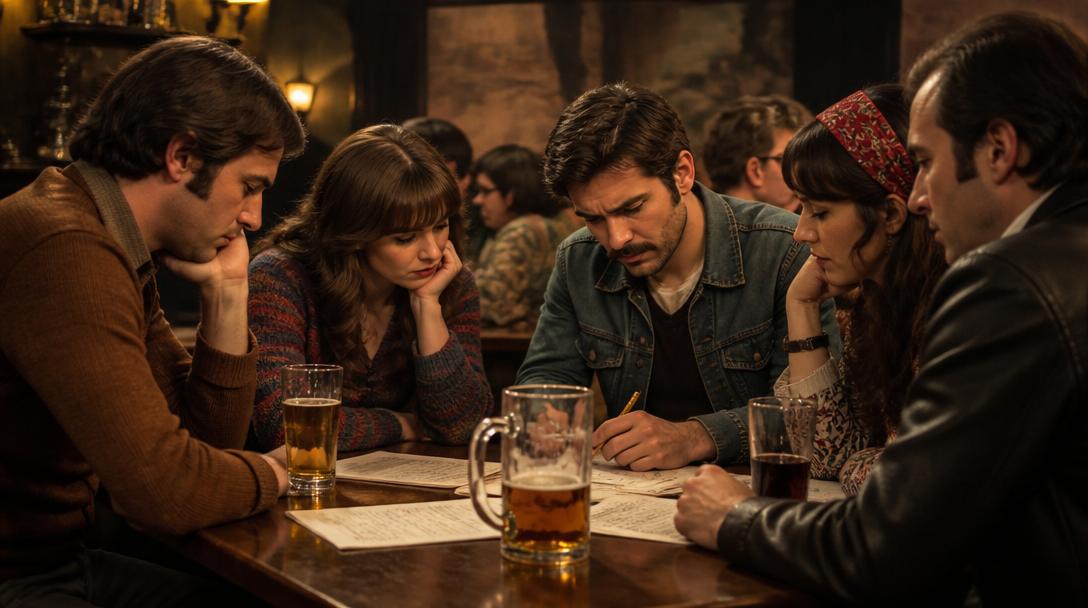
There is also a social element to the fun. Retelling the answer often becomes the real game, because one person remembers the old milk bottles, another recalls paraffin heaters, and someone else can still describe the taste of a sweet bought for a penny. These are not grand national landmarks, but they are the texture of lived history. A good retro quiz turns that texture into a shared conversation, and the best questions do not merely reward the right answer but the story that comes with it.
That is perhaps why the phrase born before 1970 carries such a charge. It marks a generation that grew up before computers became household furniture and before Britain’s daily life was measured by notifications, passwords and screen time. Yet the quiz is not really about excluding anyone; it is about recognising how much the country has changed in one lifetime. If you can still picture a milkman’s float, a round of pub darts chalked on a board, or a railway platform with a printed departure board rather than a digital screen, you are not just answering questions, you are carrying a version of Britain that younger people can only inherit second-hand.