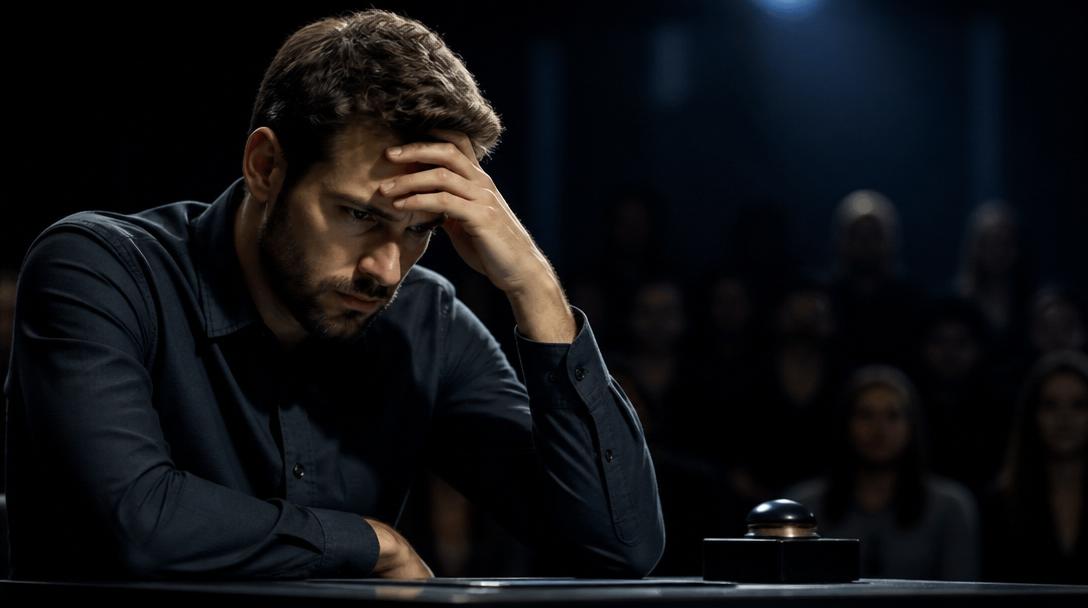
Why Hard Quiz Questions Defeat Most Minds
There is a particular sting in a hard general knowledge quiz. The questions often seem familiar at first, then turn sharply on a detail most people have never needed to store properly, whether it is a treaty date, a chemical element, a literary character or the capital of a small country. That is what makes a 10/10 score feel so elusive: not because the answers are mystical, but because broad knowledge is built from thousands of tiny fragments that rarely sit neatly together in the mind.
General knowledge has always been a strange blend of the useful and the incidental. Some facts are absorbed almost by accident, through newspapers, school lessons, television documentaries or casual conversation, while others vanish as soon as exams are over. A quiz that mixes history, geography, science, sport and culture is really testing how varied and durable a person’s memory has been over time, rather than whether they are clever in some abstract sense.
That helps explain why the hardest questions can feel unfair even when they are perfectly legitimate. A person may know the outline of the French Revolution but not the exact year the Bastille was stormed, or understand the basics of the solar system without recalling which planet has the most moons at this moment. In a pub quiz or online challenge, the difference between nine and ten correct answers is often a single fact that was once encountered and then quietly forgotten.
There is also the problem of overconfidence. People are usually better at recognising information than retrieving it under pressure, which is why a question can look easy only after the answer has been revealed. In quiz terms, that means many players feel sure they “should have known” the right response, when in truth they only knew the subject vaguely. The harder the quiz, the more it punishes that gap between familiarity and recall.
Britain’s love affair with quizzes has deep roots in that tension between knowledge and performance. From long-running radio and television competitions to the weekly ritual of the pub quiz, the format rewards quick thinking, broad reading and a decent memory for oddities. It also offers a rare public setting in which knowing the name of a mountain range, a composer or a monarch can carry social prestige, however fleetingly.
The appeal of a very difficult quiz is not simply that it separates the expert from the casual player. It is that it gives everyone a clear picture of their own strengths and blind spots. Someone brilliant on sport may struggle with literature; another may be strong on geography but weak on science; a third may coast through modern history and stumble over classical mythology. A harsh scoreline is not always a sign of ignorance so much as evidence that general knowledge is genuinely general.
That breadth matters because the world itself does not divide neatly into categories. News stories send readers from economics to politics to environmental science in a single afternoon, while everyday life demands a constant shifting between practical knowledge and cultural memory. A difficult quiz mirrors that reality by refusing to stay in one lane. It asks whether the contestant can move from the capital of a nation to the author of a novel to the function of an organ, all in a matter of seconds.
There is another reason these quizzes remain so popular: they are democratic in a way that many forms of expertise are not. You do not need a degree to answer a question about a landmark, a film, or a historic event if the fact happens to have lodged in your memory. At the same time, the scoring can be brutally unforgiving, because one wrong answer may come from a tiny lapse rather than a lack of intelligence. That combination of accessibility and difficulty keeps people coming back for another go.
A quiz described as one only 5% can score 10/10 on also taps into a familiar human urge to measure oneself against a challenge. Most players know they are unlikely to be among the top scorers, but they want to see how close they can get and which questions expose the gaps. The satisfaction comes not just from getting answers right, but from learning something new in the process, and from realising that memory can be trained by attention, curiosity and repetition.
In the end, a hard general knowledge quiz is less a test of genius than a test of range. It rewards anyone who has paid attention to the world, kept hold of details and remained curious long enough for facts to stick. And if only a small fraction of players manage a perfect 10/10, that is precisely why the challenge feels worth taking in the first place.