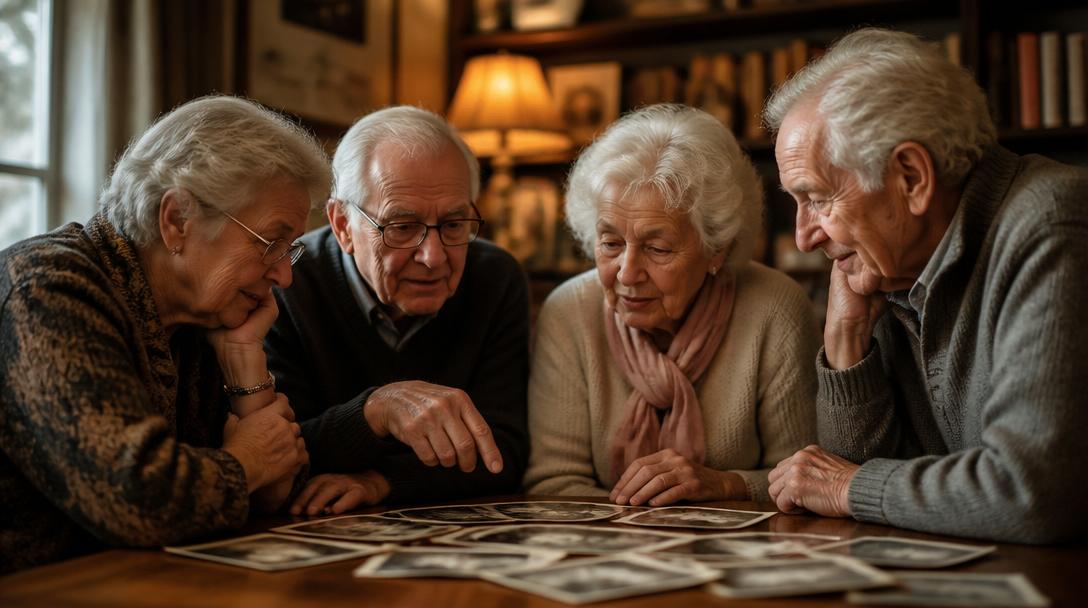
Memory Lane Quizzes Bring the Past Alive
Memory Lane quizzes work because they make knowledge feel personal. Rather than asking people to memorise dry facts in isolation, they nudge the brain towards familiar territory such as childhood television, old adverts, classic pop songs and the sorts of everyday details that once seemed impossible to forget. The pleasure comes partly from recognition and partly from surprise, when a clue unlocks a memory that had been tucked away for years.
That is why general knowledge quizzes often have such broad appeal. A question about a former prime minister may sit alongside one about a beloved biscuit tin, a film star, a royal wedding or a long-running radio programme, and the mixture keeps everyone in the room involved. In Britain especially, there is a rich seam of shared reference points to draw on, from the BBC’s early television landmarks to football finals, seaside holidays and the annual ritual of the Christmas number one. The strongest quizzes use that common culture to make people feel both challenged and comforted.
Part of the charm lies in how memory actually works. Psychologists often describe recall as being helped by cues, which means a small prompt can bring a much larger chunk of information back into focus. A picture of a school lunchbox, for instance, might be enough to make someone remember the sound of the bell at the end of the day or the packaging of a favourite sweet. Quiz questions exploit that effect neatly, because they reward not only what you know but what you can connect.
There is also a social element that should not be underestimated. A general knowledge quiz is rarely just about the answer sheet; it is about the conversation that happens around it. One person remembers the tune, another the year, another the actor who played the supporting role, and suddenly the table is full of competing memories. That collaborative quality makes memory-based quizzes especially enjoyable in pubs, living rooms and office gatherings, where the point is as much the shared laugh as the final score.
The best Memory Lane quizzes are usually built with variety. A round on old toys might sit comfortably next to one on famous British landmarks, while a question about a 1970s television theme tune can be followed by one on a historical monarch or a well-known sporting moment. This variety matters because it gives different players a chance to shine. Someone with a head for music may struggle on geography but fly through a round on chart hits, while another person may remember every detail of the Apollo missions or the England team at a particular World Cup.
A good quiz also respects the way nostalgia works without becoming lazy. Nostalgia is powerful, but it is at its best when it is anchored in real detail. The smell of hardback library books, the sight of a teletext page, the jingle of a milk bottle on the doorstep, the opening credits of a favourite sitcom all carry a kind of emotional shorthand that can make a room go quiet for a moment before everyone starts talking at once. Those details are not trivial; they are part of the texture of ordinary life, and quizzes that tap into them can feel unexpectedly vivid.
There is a further reason these quizzes endure: they are welcoming. Not everyone wants a round full of obscure science or advanced history, but almost everyone can have a go at questions about school days, childhood snacks, long-forgotten fashion trends or the biggest cultural moments of the last few decades. A well-set quiz does not make people feel foolish for not knowing everything. Instead, it invites them to remember what was once common knowledge and to enjoy the odd triumph of getting there first.
That makes Memory Lane trivia a useful antidote to the speed of modern life. In an age of constant scrolling and instant answers, there is something satisfying about pausing long enough for a memory to surface unaided. The answer might arrive after a second or two, or after a lively debate, but either way the process feels rewarding. It is less about proving intelligence than about reconnecting with the shared past that so many of us carry around, often unnoticed, until a well-phrased question brings it back into the light.