Einstein’s Riddle Stumps Logic Fans
Einstein’s Riddle is one of those rare puzzles that feels both elegant and cruel. On the surface, it asks you to match a handful of facts about five houses, five colours, five nationalities, five drinks, five pets and five cigarettes, yet the challenge lies in how those facts interact. Solvers are told that each clue is true, and from there they must deduce who drinks water and who owns the zebra. The puzzle is famous not because it is mathematically complicated, but because it rewards discipline and punishes hasty assumptions.
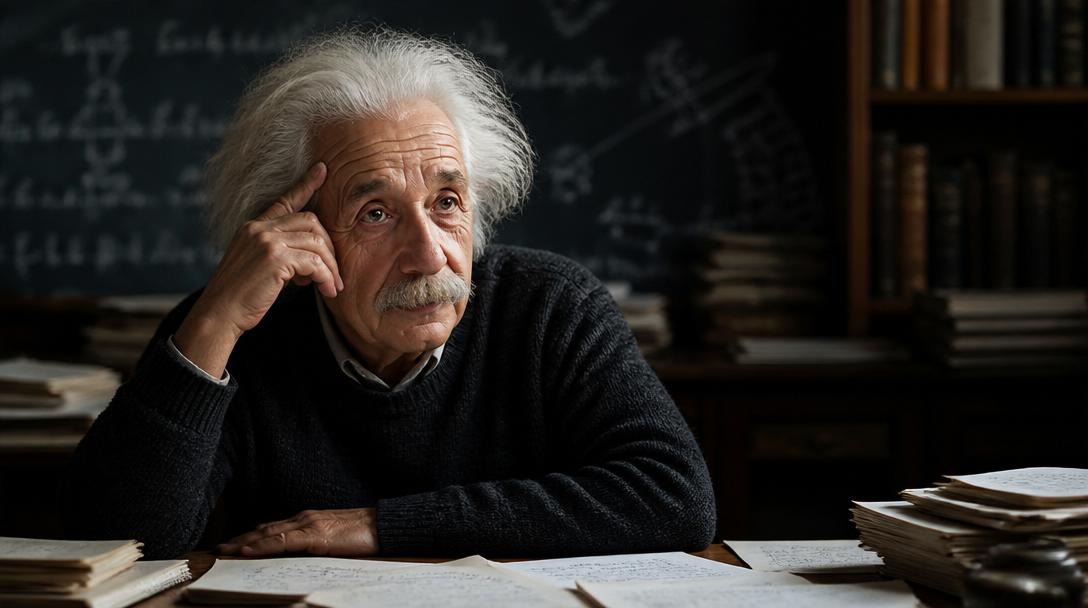
The riddle has long been associated with Albert Einstein, though the exact origin of the claim is less certain than the puzzle’s reputation suggests. What is clear is that the puzzle became widely known as a benchmark for logical reasoning, the sort of thing that gets passed around classrooms, offices and dinner tables when people want a challenge that cannot be beaten by guesswork. Its appeal lies partly in that tidy structure. Everything fits into a grid, and every clue narrows the field, which means every small deduction feels properly earned.
That structure is exactly why the riddle can be so deceptive. Many people begin by scanning the clues for an obvious starting point, only to realise that progress depends on keeping track of several possibilities at once. A clue such as one house being immediately next to another may seem minor, but in a logic grid it can eliminate whole chains of options. The puzzle trains a very particular kind of concentration, the sort that relies on patience rather than speed.
There is also something deeply satisfying about the method it demands. Solvers often use a grid, crossing out impossible combinations and marking relationships between clues until the pattern emerges. This is not a matter of memorising a trick or spotting a hidden joke. It is closer to detective work, where each clue has to be weighed against the others before a conclusion can be trusted. That is part of why the puzzle has endured for so long: it gives ordinary readers the experience of arriving at a result through reason alone.
The riddle also reveals how easily the mind jumps ahead of the evidence. People often think they have solved it after identifying one or two pairs, then discover that an early assumption has quietly led them astray. In that sense, the puzzle is a useful reminder that logic is not just about intelligence, but about restraint. You have to resist the urge to fill gaps too quickly, even when a solution seems obvious.
Its charm has much to do with the way it scales from casual play to serious challenge. A beginner can enjoy making deductions from the first few clues, while a more experienced solver can spend a longer stretch untangling the final relationships. That makes it ideal for quizzes, because it offers a genuine sense of progression. The moment a stubborn clue finally clicks into place, the whole puzzle often opens up at once.
Part of the fascination is cultural as well as intellectual. Einstein’s Riddle sits in the tradition of classic logic puzzles that have travelled far beyond specialist circles, appearing in newspapers, puzzle books and online quiz sites. It belongs to that narrow but enduring category of problems that people remember long after they have forgotten the details of the day they solved it. Even those who fail to complete it often come away with a grudging respect for its design.
The best thing about the puzzle is that it does not demand arcane knowledge or advanced mathematics. It asks only for careful reading, orderly thinking and the willingness to keep going when the answer is not immediately visible. In a world full of instant answers and quick reactions, that can feel almost old-fashioned. Yet the riddle remains as sharp as ever because it reminds us that some of the most rewarding problems are solved slowly, one logical step at a time.