World History Trivia That Tests the Ages
Ask people when the Roman Empire fell and many will answer with a neat date, but the story is more complicated than a single evening in history. The western empire is usually marked as having ended in 476 AD, when the last emperor in the West, Romulus Augustulus, was deposed, yet the eastern half continued for nearly another thousand years as the Byzantine Empire. That kind of split is what makes world history trivia so satisfying: the obvious answer is often only half the truth, and the rest depends on which region, century or empire you mean.
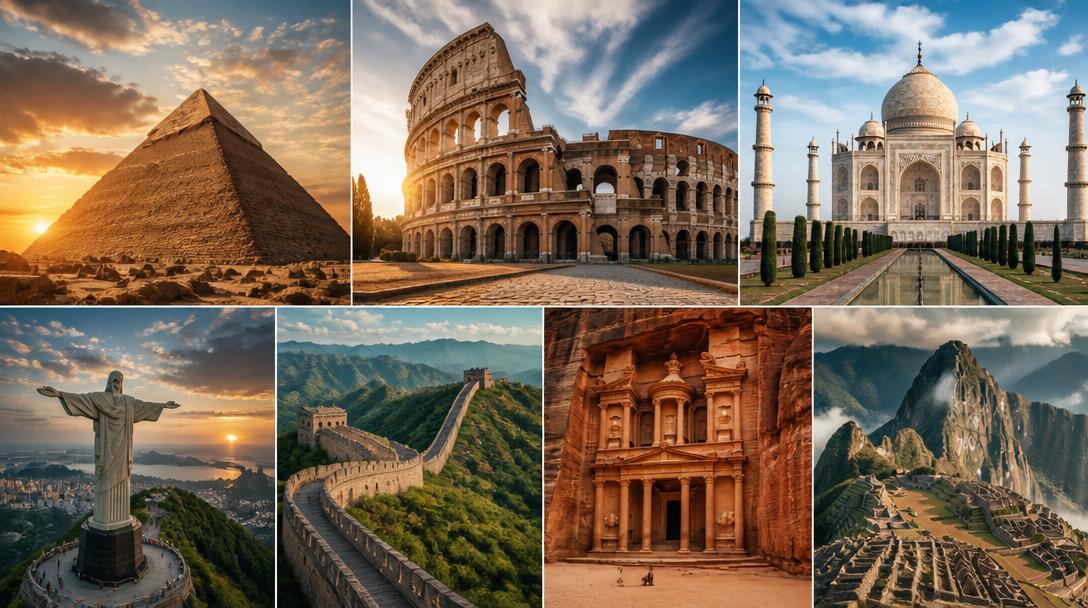
Some of the most revealing questions are the ones that force you to place events in the correct order. The Great Wall of China was not built in one go by one ruler, but developed over centuries, with major construction under the Qin dynasty beginning in the third century BC and later work under subsequent dynasties. The pyramids of Giza are far older than that, built during Egypt’s Old Kingdom, while the Parthenon in Athens belongs to the fifth century BC. Put those together and history stops feeling like a flat timeline and starts looking more like a vast, overlapping map of civilisations.
It is also easy to underestimate how connected the ancient world was. The Silk Roads linked China, Central Asia, the Middle East and Europe through trade routes that carried silk, spices, ideas and disease, making distant societies far less isolated than many people imagine. The spread of Buddhism from India into Central and East Asia, and the movement of paper-making techniques westward, show that influence travelled in both directions. Even a simple trivia question about where something began can open out into a story of merchants, monks, soldiers and translators.
Medieval history has its own traps for the unwary, not least because popular memory often squeezes several centuries into one gloomy image of castles and mud. The Black Death swept through Europe in the 14th century and killed a huge share of the population, though exact numbers vary by place and historians are careful about precise estimates. Meanwhile, the Islamic world was preserving and expanding upon Greek learning, and cities such as Baghdad became centres of scholarship, science and trade. If your knowledge of the period stops at plague and feudalism, you are missing much of the intellectual energy that shaped the later world.
Maritime exploration is another favourite hunting ground for trivia setters because the names are famous while the details are not. Christopher Columbus reached the Caribbean in 1492, but he did not “discover” a land that was already home to Indigenous peoples, and his voyages were part of a wider age of European expansion. Vasco da Gama’s route around Africa to India, completed in 1498, linked Europe more directly to Asian trade, while the later voyages of Magellan’s expedition helped demonstrate the scale of the globe, even though Magellan himself did not survive the journey. The headlines are familiar; the context is where the real knowledge lies.
Revolutions are another area where the dates matter, but so do the causes and consequences. The French Revolution began in 1789 and eventually led to the rise of Napoleon Bonaparte, while the American Revolution transformed the thirteen colonies into the United States after independence was declared in 1776. In both cases, political ideals, economic pressures and war all collided, and neither movement can be reduced to a single heroic moment. Trivia that asks who, when and why at once is usually more interesting than a question that demands only a name.
The modern era is full of events that seem close enough to be obvious, yet still trip people up. The First World War began in 1914, the Second in 1939, and the Russian Revolution unfolded in 1917, but remembering the sequence is only the start. The collapse of empires after the First World War redrew borders across Europe and the Middle East, while decolonisation after the Second World War reshaped Africa and Asia. History trivia becomes more demanding here because the consequences of one event often do not appear until years later, and the answers depend on seeing the chain rather than the link.
That is why the best world history quizzes do more than test memory. They reward anyone who can see patterns across kingdoms, religions, trade routes, wars and migrations, and who understands that history is rarely tidy. A question about a date may be the doorway, but the real challenge is knowing what the date means, what came before it and what followed after. If you can do that, you are not just recalling the past, you are reading it properly.