Landmarks That Changed the World
A good landmark quiz is never just about memory. It is about whether you can pick out a building’s silhouette, a bridge’s setting or a monument’s proportions from a single image, even when the angle is unfamiliar. That is why famous places trivia remains so satisfying: the clues are often hidden in architectural details, landscape and history rather than in a nameplate. The best-known sites have been photographed so often that they can seem obvious, yet a closer look shows how easy it is to confuse one grand structure with another.
Take the Eiffel Tower, for instance, which has become shorthand for Paris itself. It was built for the 1889 Exposition Universelle and designed by Gustave Eiffel’s company, but at the time it was controversial and not universally admired. Today its iron lattice is instantly recognisable, yet many people first identify it by context rather than form, spotting the Seine or the surrounding city before the tower itself. That is one reason landmark quizzes can be tricky: the same structure can look very different in winter light, at night or from an angle that hides its full height.
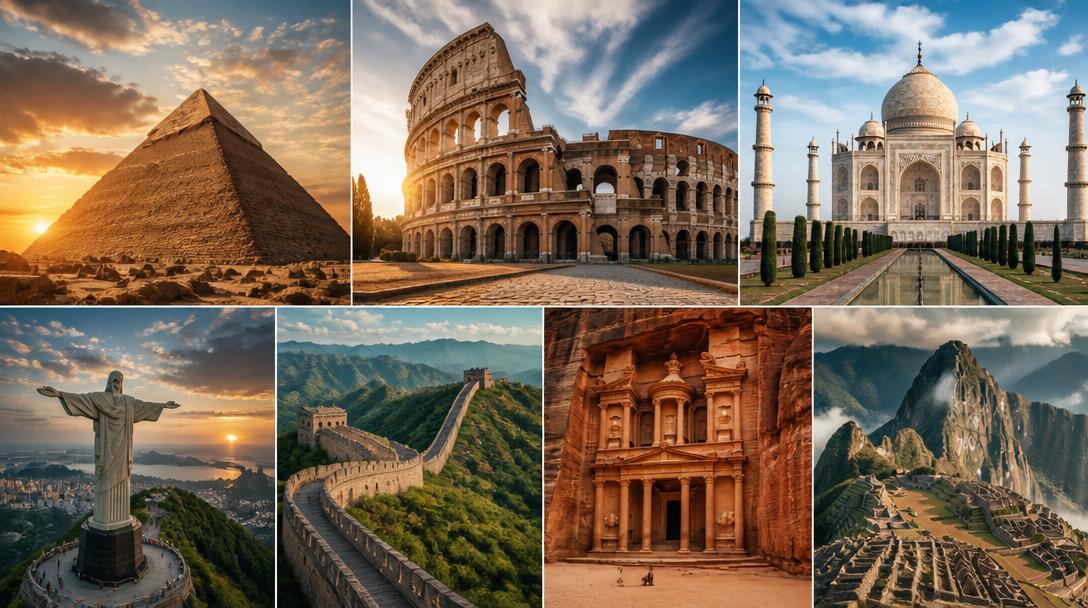
The Colosseum in Rome offers another classic test. Its vast elliptical shape and arcaded outer walls make it one of the world’s most famous ruins, but many people only know the postcard view and miss the details that distinguish it from other Roman amphitheatres. Built in the first century AD, it was used for public spectacles in ancient Rome, and centuries of damage have left it with the broken, honey-coloured appearance that now defines it. In photographs, the challenge is often not whether it is Roman, but whether it is the Colosseum or another ancient arena seen from a less familiar side.
Some landmarks are recognised less by size than by outline. The Taj Mahal in Agra is a perfect example, with its white marble dome, symmetrical minarets and reflective pool creating one of the most famous compositions in world architecture. Built in the 17th century as a mausoleum for Mumtaz Mahal, it is often identified instantly, yet shadows, distance and weather can make it look surprisingly different from the standard image. A misty morning can soften the sharp edges that help people name it at once, which is why even this celebrated monument can become a genuine quiz challenge.
Not every landmark belongs to the same era, and that variety is part of the fun. The Great Wall of China is not a single wall but a network of fortifications built and rebuilt over many centuries, so photographs can show dramatically different sections depending on the terrain. In some places it snakes over steep green hills; in others it looks like a narrow line of stone fading into the distance. Because of that scale, it is often easier to recognise the Wall from its setting than from any one piece of masonry.
The same is true of the Sydney Opera House, though for entirely different reasons. Its white shell-like roofs make it one of the most distinctive modern buildings anywhere, but even here perspective can mislead the eye. From the harbour it seems to float on the water, while from a side view its famous curves become more abstract and less immediately obvious. Designed by Jørn Utzon and completed in 1973, it shows that a landmark can be famous enough to become a symbol, yet still be hard to identify when the photograph crops out the familiar skyline.
Bridges create their own category of trivia because they are often known as much for engineering as for appearance. The Golden Gate Bridge in San Francisco is regularly mistaken by casual viewers for other suspension bridges, especially when the famous orange colour is muted by fog. Opened in 1937, it is one of the most photographed structures in the United States, but its identity depends heavily on context, with the bay, the towers and the steep approach roads all helping to confirm the answer. Strip away that setting and even a world-famous bridge can become a much harder puzzle.
Religious landmarks can be equally distinctive and equally misleading. St Peter’s Basilica in Vatican City is one of the largest churches in the world, yet quiz images often focus on the dome, the colonnade of St Peter’s Square or a fragment of the façade rather than the full building. That can lead to confusion with other great cathedrals and basilicas, especially if the photograph is taken from ground level and leaves out the scale of the piazza. In historical trivia, setting matters as much as ornament, and the surrounding square often gives the game away.
What makes these places enduring quiz favourites is that they sit at the point where memory meets recognition. A traveller might remember visiting them, but a quiz player has to identify them in seconds from a cropped image, a side profile or a view under grey skies. That is why famous landmarks continue to fascinate: they are not just destinations, but visual riddles shaped by centuries of history, and the pleasure lies in spotting the clue that everyone else has overlooked.