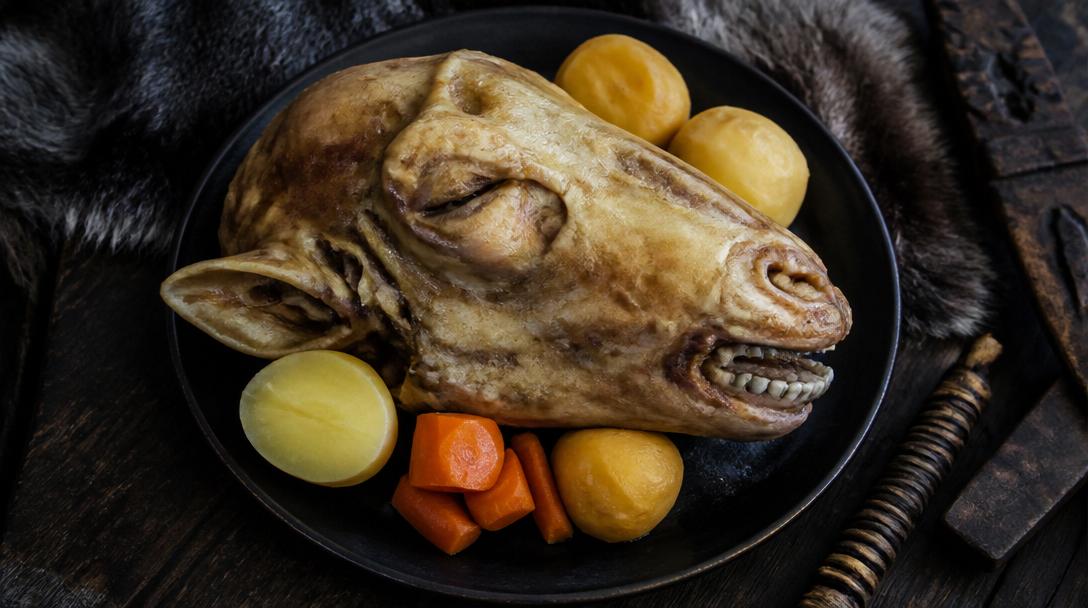
Strange Plates From Around the World
Food travels with people, but it also stays rooted in place. What one society calls a delicacy another may see as an acquired taste, yet these dishes often make perfect sense once you understand the local landscape, the seasons and the history that shaped them. From fermented fish to insects and blood sausages, unusual food is rarely strange for the sake of it; more often it is a record of survival, ingenuity and identity.
Take surströmming, the famously pungent fermented herring from Sweden. It is usually eaten outdoors because the smell is so strong, and that alone has turned it into a kind of legend far beyond Scandinavia. Yet the dish has a practical origin: fermentation was a way to preserve fish when salt was expensive and supplies could be limited. In parts of northern Europe, methods like this are not culinary curiosities but an old answer to the problem of making food last through harsh winters.
Japan offers another example in natto, fermented soybeans with a sticky texture and a scent that many first-time tasters find challenging. Natto is often eaten at breakfast with rice, mustard and soy sauce, and it has a loyal following that values both its flavour and its place in everyday life. It shows how fermentation can create something nutritious and culturally familiar from a plain ingredient. For many Japanese households, natto is not an eccentric novelty but a standard part of the table.
In Iceland, hákarl, or fermented shark, has become one of the country’s best-known traditional foods. The meat is cured and then hung to dry, a process that makes it safe to eat and removes naturally occurring toxins from the fresh shark. It is usually served in small cubes, and visitors often approach it with caution. The dish speaks of a time when island life demanded careful preservation and little could be wasted, especially in a place where fresh produce was once far harder to come by.
Further south, the idea of unusual food takes a different form. In Mexico, chapulines, toasted grasshoppers, are eaten in several regions and can be seasoned with chilli, garlic and lime. They are not a modern stunt food but part of a long culinary tradition, especially in Oaxaca, where they are sold in markets and used in tacos or eaten as a snack. In many parts of the world insects are an ordinary protein source, and they make sense in places where they are plentiful and can be gathered or farmed with relatively little land and water.
The same principle applies in Thailand, where insects such as crickets and silkworm pupae are also sold as street food. Visitors may be drawn by the novelty, but for local eaters these foods are often valued for taste, convenience and familiarity. Street food culture frequently turns ingredients into something quick, affordable and social, which is why unusual dishes can become everyday fare. What seems adventurous to a tourist may be routine to someone buying supper on the way home.
A very different kind of surprise comes from blood-based dishes, which are common in many cuisines. In Britain, black pudding has long been part of traditional breakfasts, made with blood, fat and oatmeal or barley. Similar foods appear across Europe and beyond, including morcilla in Spain and various blood sausages in Poland, Finland and elsewhere. The point is not shock value but thrift, with every part of the animal used carefully in societies where waste was once unthinkable.
Then there are dishes that are unusual because of texture rather than ingredients. Century eggs, also known as preserved eggs, are found in Chinese cuisine and are made through a preservation process that transforms the yolk and white into something dark, creamy and distinctive. They can be sliced over congee or served with pickled ginger, and they demonstrate how preservation can become a flavour in its own right. The appearance may startle the uninitiated, but the dish has a long culinary history and is appreciated for its depth.
Even animal parts that sound challenging to outsiders often have a clear cultural logic. In parts of the Mediterranean and the Middle East, offal such as tripe, liver and sweetbreads is cooked in stews, grilled or served with spices and herbs. These dishes are not relics of hardship alone; they can be prized for richness and texture. In many cuisines, what matters is not whether an ingredient is glamorous but whether it is treated well.
The biggest mistake travellers make is assuming that unfamiliar food is automatically extreme or bizarre. Taste is shaped by upbringing, religion, geography and economy, and a dish that feels shocking in one country may be comforting in another. Unusual food is often simply local food, carrying the memory of climate, scarcity and celebration in equal measure. If the table looks strange at first glance, it may be because it is asking a visitor to see the world through someone else’s practical wisdom.