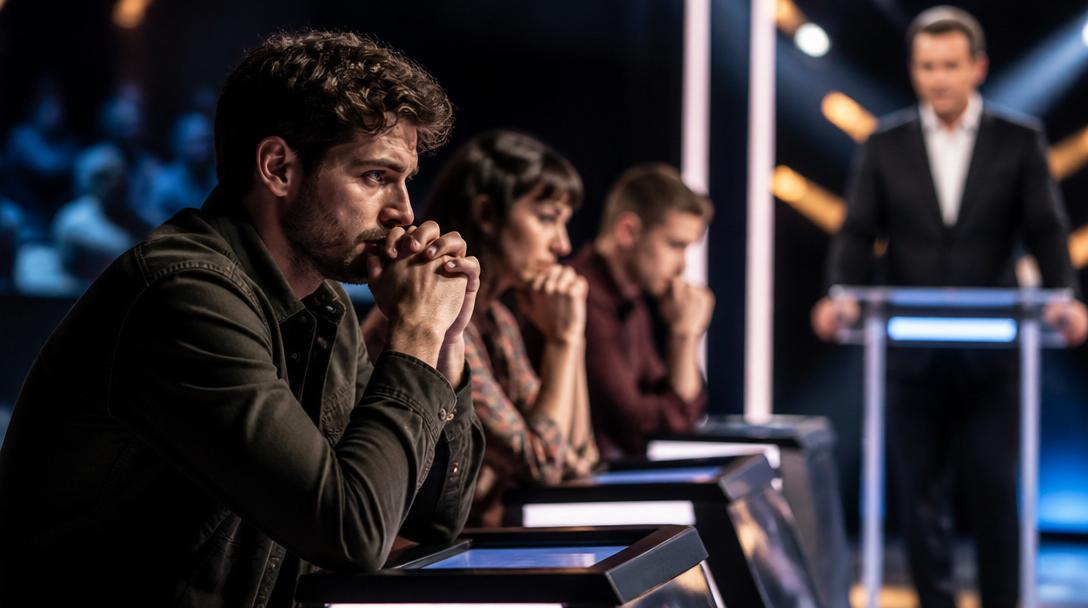
Mensa Logic Quiz and the Mind Game
For many people, a Mensa-level logic quiz carries an almost mythical status. The name itself suggests a test reserved for rare minds, but the appeal is broader than that, because these puzzles tap into a very ordinary desire: to know whether we can make sense of a messy problem faster than everyone else. That is why logic quizzes remain so popular on pub tables, in newspapers and online, where a neat question can turn into a fierce debate in seconds.
The best logic questions are rarely about obscure knowledge. Instead, they ask you to weigh relationships, spot sequences, eliminate impossibilities and notice what has been left unsaid. A classic example might involve a set of statements that cannot all be true at once, or a pattern that only reveals itself when you stop looking at each clue in isolation. The pleasure comes from the moment when the pieces click together, and what seemed confusing becomes elegantly simple.
That is also why these quizzes can feel more demanding than straightforward general knowledge. Knowing facts is useful, of course, but logic tests require a different discipline: patience. A rushed reader often leaps to the most obvious answer and misses the hidden structure, whereas a careful solver checks each statement against the rest before committing. In practice, that means the strongest performance is often not the fastest, but the most controlled.
Mensa itself is a real organisation founded in 1946, and it is open to people who score at or above the 98th percentile on approved intelligence tests. That fact tends to fuel the mystique surrounding Mensa-branded puzzles, but the reputation should not be mistaken for a guarantee of difficulty in every case. A quiz labelled Mensa-style may be designed to stretch the reader, yet the quality of the challenge depends on construction rather than on the label alone. A well-written puzzle rewards reasoning; a badly written one merely confuses.
There is something particularly satisfying about logic quizzes because they expose the habits of our own thinking. We all carry shortcuts in our heads, and those shortcuts are helpful until they are not. A puzzle that asks you to compare possibilities can reveal how quickly the mind prefers a familiar answer, even when the evidence points elsewhere. In that sense, the quiz is not only a game but a small lesson in cognitive discipline.
This is one reason such quizzes work so well in social settings. At home or in the office, people often approach them with very different styles. One person dives in, another talks through every possibility aloud, and a third stays silent until the crucial clue appears. The group dynamic can be as revealing as the puzzle itself, because solving aloud often shows how people test ideas, reject them and return to them with fresh eyes. Even when the answer is reached collectively, the route can be full of false starts.
A good logic quiz also has a strong editorial instinct behind it. The puzzle setter has to be fair, which means the clues must be sufficient, the wording precise and the solution uniquely defensible. That is not an easy balance to strike. If the question is too obvious, it disappoints; if it is too opaque, it feels like a trick rather than a test. The best questions invite you to think harder without making you feel cheated.
Part of the fascination comes from the way these quizzes flatter and humble us at the same time. A person may solve one question instantly and then struggle with the next, only to discover that the difficulty lay in a tiny detail they overlooked. That unpredictability is what keeps readers engaged. It mirrors real-life reasoning far more closely than the fantasy of always being right on the first try.
If there is a secret to handling a Mensa-level logic quiz, it is not genius in the cinematic sense. It is the habit of slowing down, reading carefully and refusing to let the first plausible answer dominate the field. Strong solvers keep track of what must be true, what cannot be true and what remains possible, even when the brain is itching to jump ahead. That approach may not look glamorous, but it is often the difference between a lucky guess and a genuine solution.
In the end, the quiz master is not simply the person with the quickest mind. It is the person who can stay organised in the face of ambiguity and treat every clue as part of a larger pattern. That is why a good logic puzzle remains endlessly appealing: it offers a brief, sharp examination of how we think, not just what we know.