Hollywood’s Golden Age Memory Test
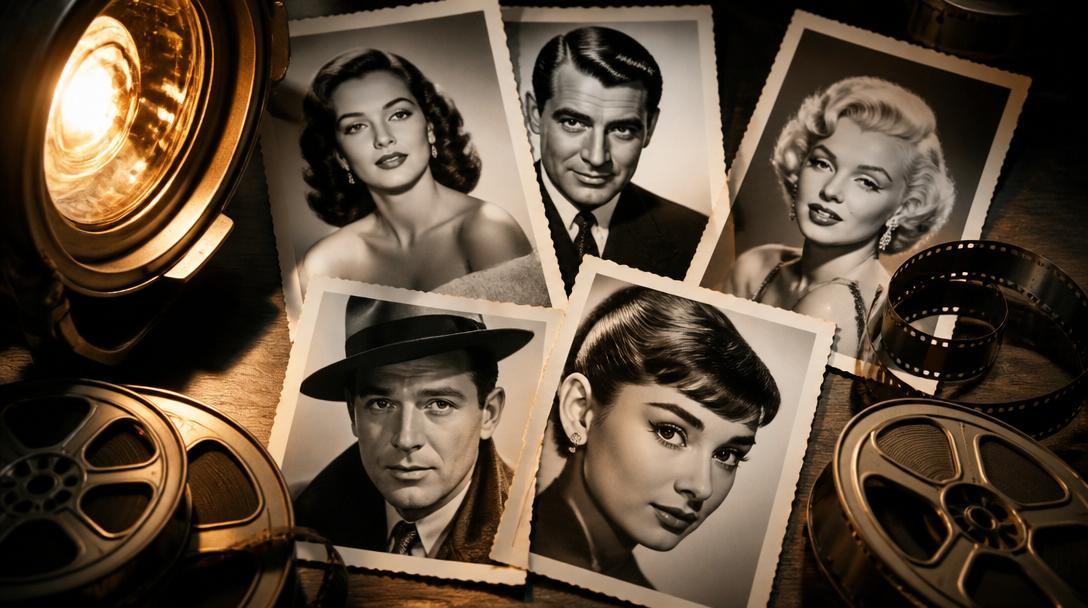
There was a time when the names above the title mattered almost as much as the story itself. Hollywood’s Golden Age, roughly stretching from the late 1920s to the early 1960s, was built on studio power, star images and the kind of polished escapism that made cinema feel like an event. It was the age of MGM’s gloss, Warner Bros grit, Paramount elegance and 20th Century Fox spectacle, when audiences recognised contract players the way today’s viewers spot streaming regulars. The nostalgia lingers because so much of that world was carefully staged, yet still carried a sense of magic that modern film often tries to recapture.
A quiz on this era is never just about remembering titles; it is about recognising faces, voices and cultural touchstones. You might be asked to identify Audrey Hepburn’s breakfast spot in Breakfast at Tiffany’s, though that film sits at the tail end of the classic studio period, or to place Humphrey Bogart in Casablanca, where his trench coat and weary charisma became part of film history. Then there are the great pairings that defined the age: Clark Gable and Vivien Leigh in Gone with the Wind, Katharine Hepburn and Spencer Tracy in a string of sophisticated comedies and dramas, or Judy Garland in The Wizard of Oz, a film whose Technicolor journey from Kansas to Oz remains one of cinema’s most famous transitions.
Part of the fun lies in how many of these films are instantly recognisable from a single image. Marilyn Monroe standing over a subway grate in The Seven Year Itch, Grace Kelly radiating icy poise in Rear Window, or James Dean leaning against a wall in Rebel Without a Cause all tell you something about the era’s ideas of stardom. The Golden Age also produced enduring supporting figures, from the sharp-tongued Eve Arden to the imperious Bette Davis, whose performance in All About Eve helped cement her reputation as one of Hollywood’s greats. Even if you cannot recall every plot twist, the visual memory often does the heavy lifting.
The period was also shaped by the studio system, which can make trivia questions trickier than they first appear. Stars were often under long-term contracts, films were shot on backlots, and the same actors could appear across very different genres, from screwball comedy to swashbuckler to melodrama. That is why a quiz might move from Singin’ in the Rain to Ben-Hur, from Roman Holiday to North by Northwest, asking you to separate the musical from the thriller and the historical epic. The variety was enormous, but the studios still aimed for a consistent sheen, and that uniformity is part of what makes the era feel cohesive in retrospect.
Music and fashion are just as important to the memory game. The glamour of the Golden Age was not only in the stories but in the hats, gloves, tuxedos and gowns that made stars look untouchable. Fred Astaire and Ginger Rogers turned dancing into a form of perfect romantic engineering, while the songs of the era travelled far beyond the cinema, from Show Boat to Gigi and beyond. Even the dialogue had a rhythm that people still quote, whether it is the clipped wit of a Billy Wilder script or the romantic fatalism of a wartime drama.
For many people, the appeal is wrapped up in black and white itself. Modern viewers are so used to colour that the absence of it can make old films feel strangely intimate, as though the eye is forced to notice light, shadow and expression more carefully. That is one reason film-noir titles such as Double Indemnity and The Maltese Falcon still hold up so well, with their hard angles and morally compromised characters. The style was so strong that it became part of the storytelling, not merely a technical limitation.
A good nostalgia quiz also reminds us that the Golden Age was not a single mood but a collection of them. There was the grandeur of epics, the sparkle of musicals, the tension of thrillers, the wit of romantic comedies and the emotional force of wartime stories. Some answers come easily because the films remain cultural landmarks; others require a deeper memory of directors, release years or famous scenes. That mix of certainty and doubt is what makes the subject so satisfying, especially for anyone who grew up hearing parents or grandparents speak about movie-going as a weekly ritual rather than an occasional treat.
The great irony is that Hollywood’s Golden Age survives partly because it has become a memory of a memory. Many of the films are still available, but they also live in quotations, references and inherited affection, passed down through families and film clubs and late-night television schedules. So when a quiz asks you to remember who starred in Roman Holiday or which film featured a staircase so famous it became part of cinema lore, it is really asking how well you can navigate that shared archive. If the answer comes quickly, you have not merely remembered a film title; you have reopened a whole vanished world.