Einstein’s Riddle and the Art of Logic
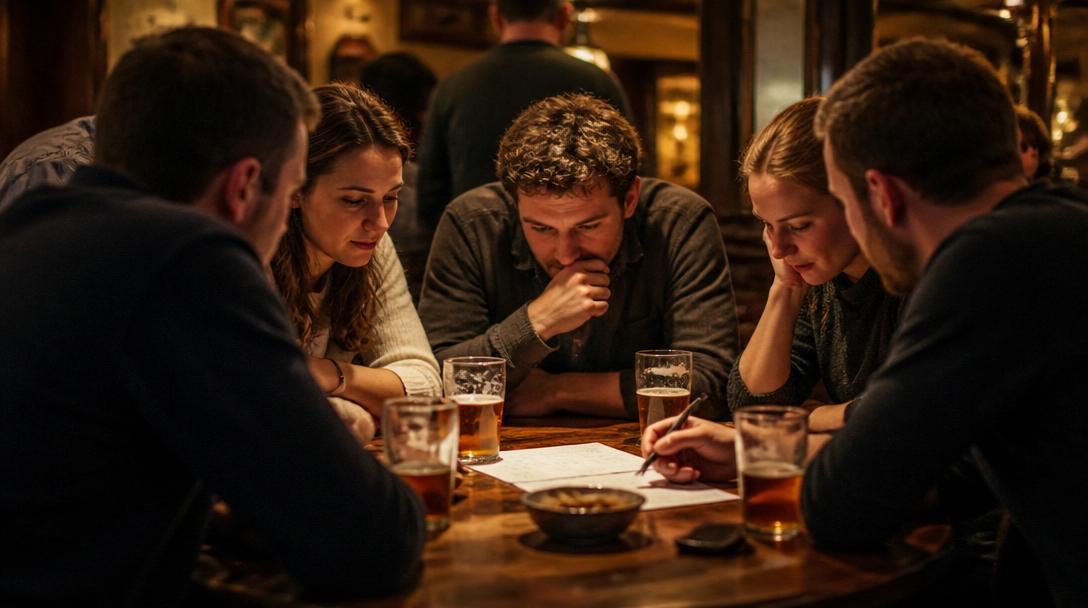
The puzzle has become a favourite of puzzle books, classrooms and online quizzes because it feels impossibly intricate while relying on simple rules. It presents a neat row of houses, a handful of clues and a demand to work out who owns what, who drinks what and who keeps which pet. The pleasure lies not in luck but in method, because every answer must be earned one step at a time.
The version most people know is often called Einstein’s Riddle, though the famous association is a little murky. It is closely linked to logic-grid puzzles, where the solver marks out possibilities and eliminates contradictions until only one arrangement remains. The appeal is timeless because the brain enjoys order, and because a puzzle that appears overwhelming can suddenly collapse into clarity when one clue is placed correctly.
What makes this challenge so absorbing is that it rewards discipline over brilliance. A hurried solver may be tempted to jump to conclusions, but logic puzzles punish that habit almost immediately. The proper approach is to treat each clue as a constraint, then test it against the others until the pattern begins to emerge. In that sense, the puzzle is less a test of raw intelligence than of calm attention.
That is why the most successful solvers often use a grid or chart rather than working purely in their heads. By setting out the categories and crossing off impossibilities, they turn a tangled verbal problem into a visible structure. This is not cheating or overcomplication; it is the essence of the exercise. The puzzle asks whether you can organise information sensibly, not whether you can boast about remembering every clue at once.
There is also a distinctly satisfying rhythm to the process. One clue may identify a fixed position, another may rule out a colour or a pet, and a third can then unlock a chain of deductions. Each small breakthrough narrows the field, and the puzzle gradually shifts from confusion to inevitability. That moment of inevitability is what keeps people coming back, because it feels like watching a locked door open from the inside.
Einstein’s Riddle also endures because it sits neatly between entertainment and mental training. Teachers like it because it encourages careful reading, logical sequencing and working memory without demanding specialist knowledge. Puzzle fans like it because it offers a fair challenge: every piece of information is available from the start, and success depends on making sense of it properly. In an age of quick taps and instant answers, that kind of slow thinking has become unusually attractive.
The puzzle’s structure also reveals something about the way people think under pressure. Some solvers are drawn to broad patterns, while others prefer to exhaust every clue methodically before making a move. Both styles can work, but only if the solver remains disciplined enough to check each assumption. The real mistake is to treat the puzzle as a race, when it is actually a conversation between clues.
What many people enjoy most is the moment when a seemingly trivial detail proves decisive. A single colour, drink or nationality can become the key that unlocks the whole board, and suddenly a problem that looked enormous starts to feel elegant. That shift is deeply satisfying because it shows how careful reasoning can uncover hidden order in a mass of ordinary facts. It is the same basic pleasure that lies behind crosswords, Sudoku and other classic puzzles, though Einstein’s Riddle gives it a more theatrical form.
Its continued popularity also reflects a broader appetite for proof that thinking still matters. The puzzle does not ask for trivia, speed typing or specialist jargon. It asks for patience, organisation and the willingness to revisit what you think you know. That is a rare kind of challenge, and it explains why so many people are drawn to it even when they know it will fight them all the way.
For all its reputation, the riddle is not mystical. It is simply a well-built logic problem that rewards anyone prepared to slow down and reason carefully. Yet that simplicity is exactly why it has lasted so long, because the rules are plain, the challenge is genuine and the answer, once found, feels completely deserved. Few quizzes manage to be so infuriating, so fair and so quietly addictive at the same time.