Can You Beat the Quiz Master
A good quiz can feel like a brisk tour through the entire contents of the national mind. One minute you are recalling the capital of Canada, the next you are trying to remember which Shakespeare play features Malvolio, before the whole room is derailed by a question about a chart hit from the 1990s. That variety is the point of mixed trivia, and it is also what makes it so hard to beat the person holding the cards. The quiz master has the advantage of surprise, but the players have something equally powerful if they can use it well: breadth, calm and a willingness to make sensible guesses.
Mixed trivia works because it reflects how memory actually behaves. People rarely store knowledge in neat, separate drawers; instead, facts cling to places, periods, songs, school lessons and odd little associations. A question about the moon landing may trigger a memory of a documentary, while a query on British rivers might unlock a classroom map from years ago. The best players are often not those with the most obscure knowledge, but those who can move quickly between subjects without letting one awkward gap shake their confidence.
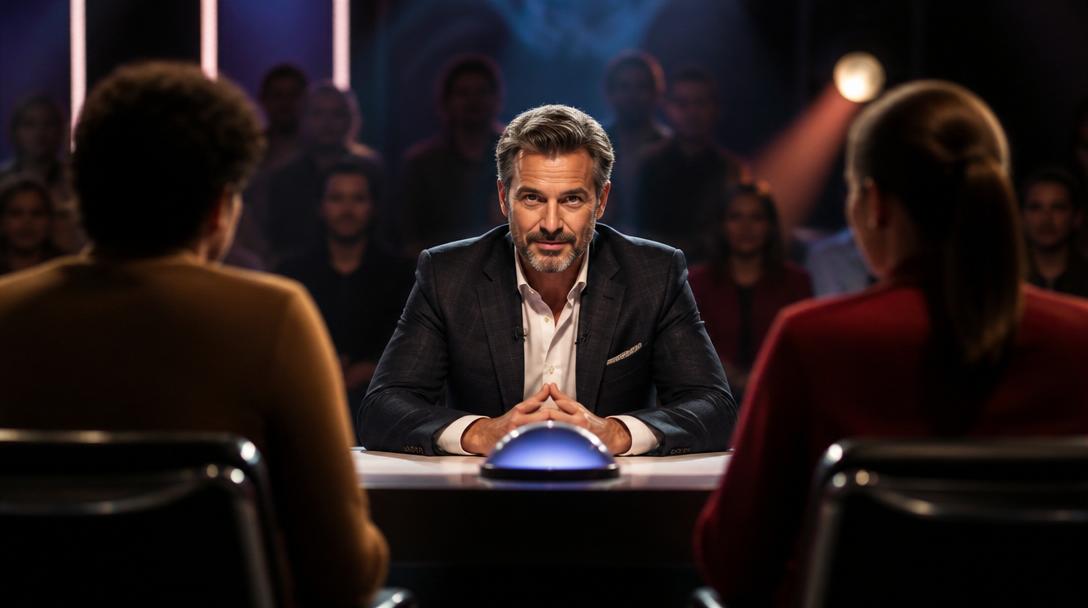
That is where the quiz master earns their reputation. A skilled host understands rhythm, and rhythm matters as much as the questions themselves. They will mix straightforward topics with the occasional curveball, keeping the room alert and preventing anyone from settling into a comfortable pattern. In a pub quiz, that might mean following a round on literature with one on football, then moving to geography, music and a picture round that leaves everyone squinting at a blurred landmark. The effect is deliberate, because mixed trivia rewards adaptability more than narrow expertise.
The most successful teams usually divide the work without making a fuss about it. One person may be strong on sport, another on history, another on television and film, and together they build a sort of collective memory. But even a strong team can be caught out by questions that sit between categories, such as a historical figure who appears in a novel or a song title borrowed from a famous painting. The quiz master knows that these hybrids can be the most effective traps, because they punish overconfidence and reward careful listening.
There is also a psychological game in play. Once a team has missed a few early questions, it can start to chase points rather than think clearly, and that is exactly when mistakes multiply. The quiz master does not need to be theatrical to control the room; a simple pause before revealing the answer can be enough to heighten the pressure. In that pause, players often second-guess themselves, even when their first instinct was right. Mixed trivia is full of those moments, which is why composure can matter as much as knowledge.
Of course, the quiz master is not invincible. The smartest players learn to spot patterns in the style of questioning, even if the topics change constantly. Some hosts favour precise factual recall, while others lean towards broader cultural knowledge or wordplay. If a round often asks for the most famous, the oldest or the largest, then careful reading becomes vital. If a round is more lateral, then the challenge is to think around the question rather than towards the obvious answer.
There is a particular pleasure in the questions that seem impossible at first but become solvable through logic. A player may not know the answer outright, yet they can narrow it down by thinking about time period, geography or context. That is why mixed trivia is so satisfying when it is done well: it allows both memory and reasoning to play a part. A quiz master who understands this will not merely test recall, but invite the room into a contest of judgement, where the best answer is sometimes the one that feels most plausible rather than the one that arrived first.
For all the drama, the appeal of the showdown lies in its fairness. Everyone begins with the same question and the same chance to shine, whether the subject is astronomy, soap operas or the history of the Beatles. The quiz master may control the tempo, but the players control how they react, and that is where the contest is won. Outsmarting the quiz master is rarely about knowing every answer; it is about staying alert long enough to spot the openings they cannot help but leave behind.