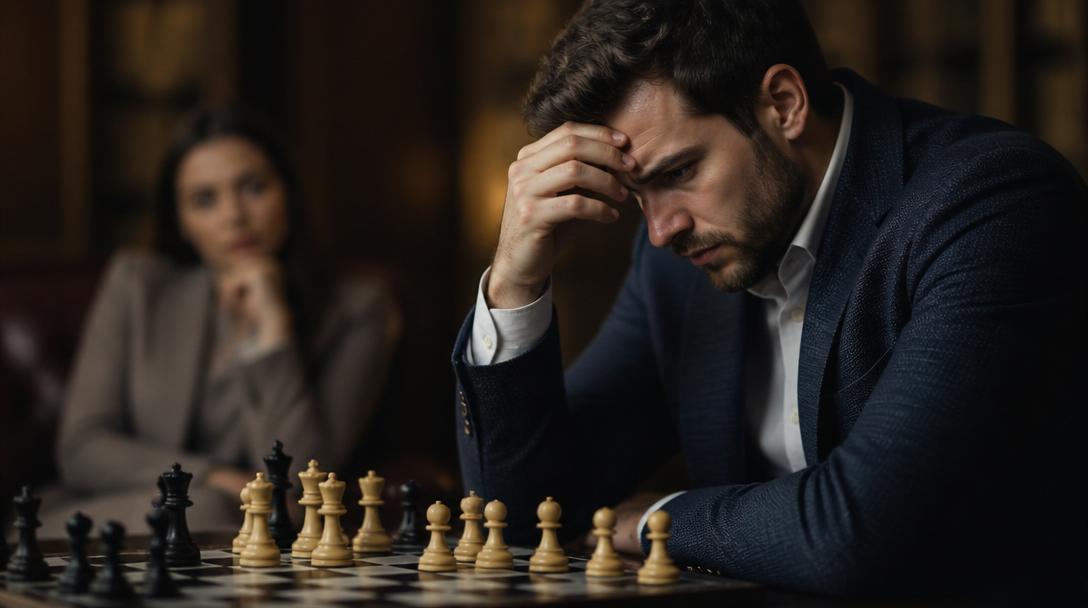
Why Hard Trivia Defeats Even Clever Minds
There is a particular kind of frustration that comes with a fiendishly difficult trivia quiz. You recognise the subject, you know you have seen the answer somewhere before, and yet the right fact stays just out of reach while an almost-correct guess tempts you into the wrong box. That is why a title such as The Impossible Trivia Quiz can feel more accurate than theatrical: once the questions start mixing general knowledge with careful phrasing, even a bright reader may struggle to pass 50 per cent.
The first trap is that trivia rarely rewards raw intelligence in the way people expect. General knowledge is built from exposure, repetition and luck as much as from learning, which means two people of similar ability can perform very differently depending on what they have read, watched or remembered over the years. A person who knows a great deal about football may be baffled by art history, while someone with a head full of literature and geography may stumble over film or science. The most brutal quizzes exploit that unevenness, moving from one subject to another so that no single area of strength can carry the day.
Then there is the question of memory itself. Psychologists have long shown that recall is not a perfect recording but a reconstruction, and that makes trivia especially slippery. When a quiz asks for a date, a capital city or the name of a character, the brain often produces a familiar fragment and then fills in the gaps with something plausible but wrong. That is why people are so often certain and mistaken at the same time, a combination that makes impossible quizzes feel personal as well as difficult.
A good hard quiz also leans on wording. A question may be technically simple, but one carefully placed word can change everything, particularly if the reader skims too quickly. Asking for the first, the largest, the oldest or the nearest is not merely decorative detail; it is the difference between success and failure. Many players lose points not because they do not know the answer but because they answer the question they assumed had been asked.
Multiple-choice questions add another layer of mischief. They seem easier because the answer is there on the page, yet that very convenience can produce a false sense of security. If one option sounds almost right, the mind begins to bargain with itself, and a wrong answer can appear more persuasive than the correct one simply because it feels familiar. Quizzes built on this principle do not just test knowledge; they test hesitation, pattern recognition and the ability to ignore a convincing decoy.
There is also a reason people often do better on trivia in conversation than under quiz conditions. In a pub, on a sofa or at the dinner table, answers can arrive slowly, with hints from the room and little time pressure. In a formal quiz, the clock changes the mood entirely. Once the pressure rises, memory retrieval becomes less reliable, and facts that would surface naturally in relaxed settings can vanish behind nerves, overthinking and the fear of looking foolish.
The impossible quiz format is especially effective because it mixes broad cultural reference with exact knowledge. A question may begin with something familiar, such as a famous book, a classic film or a well-known capital, then hinge on a detail most people have never needed to memorise. This creates the illusion that the quiz is being fair while quietly raising the difficulty level. It is not enough to have heard of the subject; you have to know the precise detail the setter has chosen.
That is why passing 50 per cent can be a genuine achievement rather than a modest one. A score above the halfway mark suggests more than luck, but it also suggests something subtler: the ability to stay calm, read carefully and avoid being bullied by a confident guess. Hard quizzes reward people who can think in layers, weighing instinct against memory and resisting the urge to answer too quickly. In that sense, the challenge is not simply to know more, but to lose less to the quirks of your own mind.
For many readers, that is the appeal. An impossible trivia quiz is not just a test of facts but a reminder that knowledge is patchy, memory is unreliable and certainty can be a trap. The pleasure lies in watching just how far your instincts can take you before the questions become properly merciless, and in realising that scoring more than 50 per cent may be harder than it first appears.