The 90s Pop Culture Quiz Millennial Memory
If you want to understand why 90s trivia has such a hold on millennials, start with the strange intimacy of the decade. Pop culture moved at a pace that felt both slower and more frantic than today: you heard a song on the radio, saw a film at the local cinema, then spent days arguing about it at school because there was no social media to settle the matter. That made every shared reference feel sticky, from the opening bars of a chart hit to the first frame of a film trailer shown before the main feature.
A proper nostalgia quiz works because the 1990s were packed with instantly recognisable touchstones. Television alone can send a room full of people into immediate competition, whether the subject is Friends, The Fresh Prince of Bel-Air, The X Files, The Simpsons or the Saturday morning schedules that defined childhood. In Britain, the memory bank is even richer, because the decade delivered everything from Baywatch to Gladiators, from the rise of boy bands to the cult of the teen magazine cover. The thrill of the quiz lies in how quickly one clue can unlock a whole era of after-school routines, cassette tapes and the family television set.
Music is often the strongest thread. The decade gave us Britpop, the Spice Girls, Take That, Oasis, Blur, TLC, Backstreet Boys and many more acts whose songs still dominate karaoke nights and pub quizzes. A question about a number one single is never just about the chart position; it is about the memory of where you heard it, who owned the album and whether you were brave enough to admit you preferred a rival band. Even one detail, such as a music video set in a neon dreamscape or a CD single with several remixes, can transport people straight back to Woolworths, HMV or the school disco.
Fashion and branding have a similar power. Ask about platform trainers, velour tracksuits, bucket hats or the omnipresent scrunchie, and the room fills with laughter because the decade was gloriously specific in its style. Logos mattered, from the swoosh on trainers to the brand names plastered across sportswear, and so did gadgets that now look almost comic in hindsight, such as Tamagotchis, Walkmans and the first mobile phones that were more brick than handset. The appeal of these questions is not just recognition but the shared embarrassment of having once thought these things were the height of cool.
Film trivia from the 90s works especially well because the decade produced a run of blockbusters that became part of the cultural furniture. Titanic, Jurassic Park, The Matrix, The Lion King, Home Alone, Clueless and Pulp Fiction all carry instantly recognisable images and lines, even for people who have not seen them in years. A quiz question may ask about a character, a soundtrack or an award, but what it really tests is whether the memory has survived repeated television repeats, endless references and the occasional late-night rewatch. In that sense, trivia becomes a measure of how culture is absorbed into everyday life.
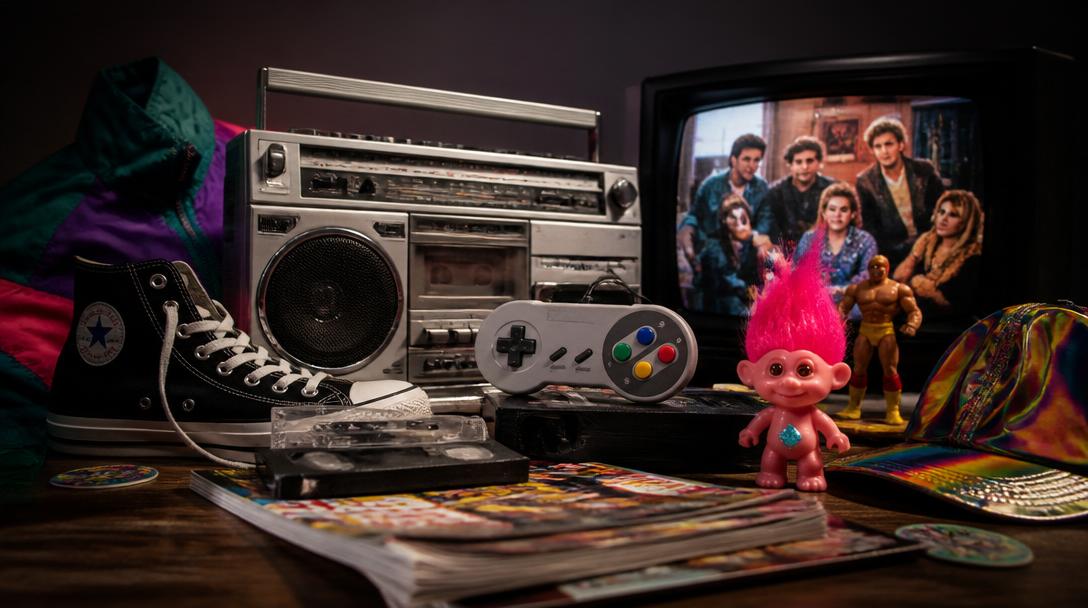
The best quizzes also mine the everyday oddities of the decade, because nostalgia is rarely only about the big hits. It is about Pogs, Furbies, the smell of a fresh VHS cassette, bedroom posters torn from magazines and the ritual of recording songs off the radio with a finger hovering over the pause button. It is about Blockbuster on a Friday night, about watching music television when it still felt like a destination and about the first time the internet arrived with a squeal of modem noise. These details matter because they are the texture of memory, not merely the headline acts.
There is also something democratic about 90s pop culture trivia. You do not need to be a scholar to know that The Simpsons is older than many of the people quoting it, or that the Spice Girls turned pop into a global branding machine, or that Pokémon became a phenomenon long before smartphones made fandom easy. The questions reward people who were simply there, absorbing the decade one chart hit and one television schedule at a time. That makes the quiz feel less like a test and more like a shared family album, except that everyone is arguing over who remembers the details best.
Part of the pleasure comes from the way the decade sits between analogue and digital worlds. Millennials remember rewinding tapes, burning mix CDs, printing out directions from a desktop computer and waiting for magazines to publish next month’s answers. They also remember the first stirrings of online life, when a screen name could feel revolutionary and a single webpage seemed impressive enough to mention in conversation. A 90s pop culture quiz captures that hinge moment beautifully, because it asks people to recall an era when celebrity, music and television still arrived in neat packages, yet the future was already beginning to hum in the background.