The 1950s Pop Culture Quiz Challenge
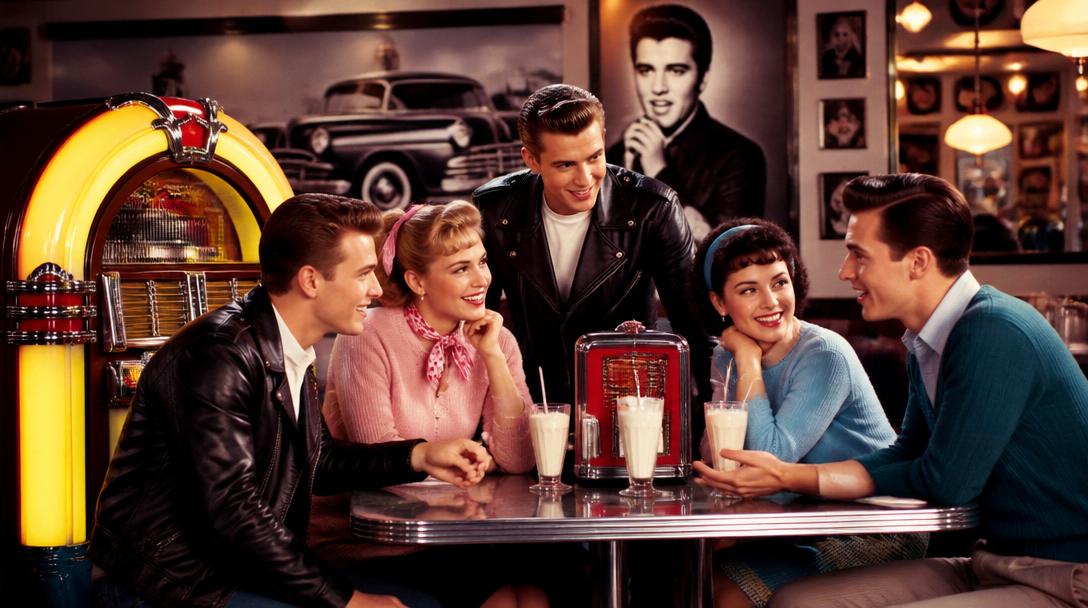
Ask people to picture the 1950s and the answers arrive in bright fragments: jukeboxes, leather jackets, black and white television sets and teenage rebellion. Yet the decade was more than an easy shorthand for nostalgia. It was the moment when mass entertainment became unmistakably modern, with new stars, new formats and new habits of consumption spreading through homes and high streets. That is why a quiz on 1950s pop culture works so well: it is not just a memory test, but a snapshot of how post-war life began to feel faster, louder and far more connected.
Music sits at the heart of any serious 1950s quiz because the decade gave birth to the idea of the pop star as we now understand it. Elvis Presley became a worldwide phenomenon after his early recordings for Sun Records and his television appearances in the mid-1950s, while Bill Haley and His Comets brought rock and roll into the mainstream with Rock Around the Clock. Chuck Berry and Little Richard helped define the sound too, each bringing a distinctive energy that still echoes through popular music. On the British side, the decade also saw the first stirrings of skiffle’s influence, with Lonnie Donegan turning songs such as Rock Island Line into huge hits and inspiring a generation of young musicians.
Television is another rich seam for quiz questions because the medium was still establishing its place in everyday life. In Britain, the BBC’s Coronation broadcast in 1953 became a landmark event, watched by millions and proving that television could unite a nation. Across the Atlantic, programmes such as The Ed Sullivan Show became cultural gatekeepers, helping to introduce new performers to vast audiences. The decade also gave viewers the first true sitcom stars and variety favourites, though it was the sense of shared viewing itself that mattered most. For many families, the television set was no longer a novelty by the end of the decade; it was a fixture around which evenings were organised.
Cinema remained equally important, but the 1950s also forced film-makers to adapt to television’s rise. Hollywood responded with widescreen spectacle, lavish musicals and memorable stars who could fill a cinema screen in a way television could not match. Singin’ in the Rain arrived in 1952 and remains one of the most beloved films of the era, while West Side Story, which opened on Broadway in 1957 before its later film adaptation, captured the energy of changing urban youth culture. Outside the musicals, audiences embraced actors such as Marilyn Monroe, James Dean and Audrey Hepburn, each of whom became a symbol of style as much as performance. Their images helped define the decade’s glamour, whether in studio publicity shots, fashion magazines or the cinema lobby.
Fashion is often treated as a side note, but in a quiz about the 1950s it deserves proper attention. The decade’s silhouettes were sharply gendered and instantly recognisable: full skirts, nipped-in waists and petticoats for women, along with tailored suits and the emerging casual cool of denim and leather for men. James Dean’s association with jeans and a plain white T-shirt helped turn simple clothing into a statement, while Audrey Hepburn’s elegance in films such as Roman Holiday influenced a more understated idea of sophistication. In Britain, the decade also saw the spread of teenage style as a distinct category, helped by the growth of record shops, magazines and youth-oriented advertising.
A good quiz also pays attention to the way pop culture crossed into everyday objects. The 1950s were the age of the 45 rpm single, which helped make individual songs more collectible and encouraged listeners to follow charts with new intensity. Jukeboxes kept music in cafes and social clubs, while portable transistor radios, introduced in the decade, made it easier to carry sound into parks, beaches and bedrooms. These are not just gadgets for nostalgia’s sake; they changed how people heard music and how quickly a song could become part of the national conversation. When quiz questions focus on these details, they reveal the decade as a lived experience rather than a museum display.
The same is true of magazines, comics and children’s entertainment. The Beano and The Dandy were already established in Britain, but the 1950s helped entrench comic-reading as a weekly ritual for many children. In America, television cartoons and character merchandise began shaping the relationship between screen entertainment and consumer goods. The decade also saw the rise of youth clubs, coffee bars and dance halls as cultural spaces in their own right, places where music and fashion could be tried out before they filtered into the wider world. Pop culture was no longer confined to theatres or radio studios; it was being lived socially, one record, one outfit and one programme at a time.
What makes the 1950s such a rewarding quiz theme is that the decade sits at a hinge point between old and new. Radio still mattered, cinema still mattered, and print culture still mattered, but television, rock and roll and youth identity were starting to redraw the map. That tension produces brilliant questions because the answers are often deceptively familiar yet surprisingly specific. A strong quiz does not merely ask who sang a hit or which film won praise; it asks players to recognise the moment when modern pop culture began to take the shape we still know today.