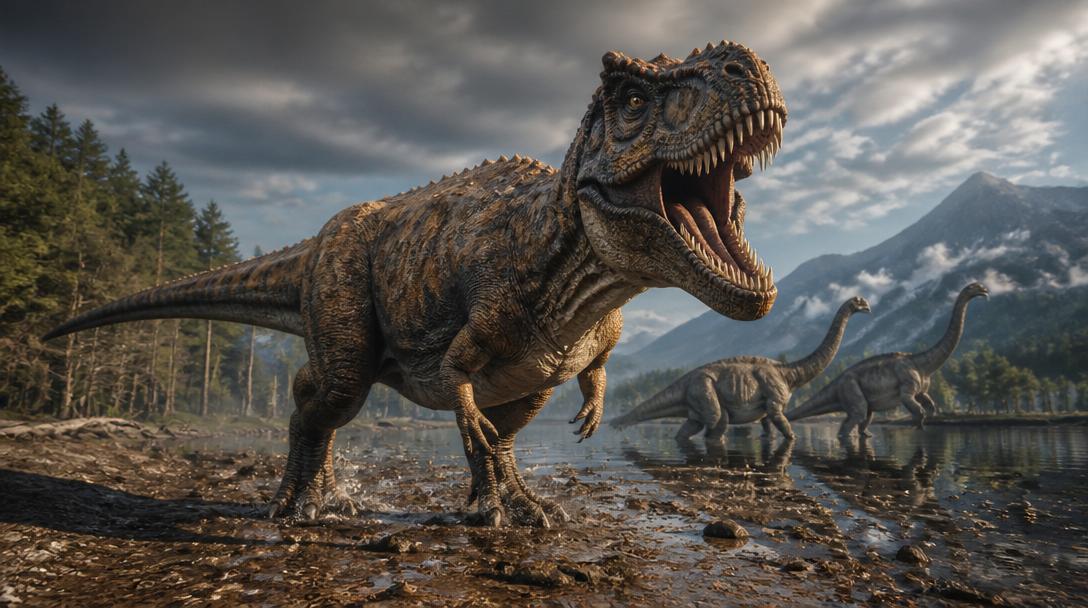
How Well Do You Know Dinosaurs
If you think a dinosaur quiz is just a matter of spotting a Tyrannosaurus rex or naming the biggest creature that ever lived, you are only scratching the surface. The best questions do not rely on film clichés but on the real science of fossils, anatomy and evolution. That is where the challenge becomes properly interesting, because the world of dinosaurs is full of oddities that can catch out even confident quiz players.
Start with the basics and the first surprise is that not every prehistoric reptile was a dinosaur. Pterosaurs ruled the skies, marine reptiles swam in the seas, and both are often mistaken for dinosaurs in casual conversation. Dinosaurs, in the strict scientific sense, were a particular group of land-dwelling reptiles with a distinctive body plan, and birds are now understood to be their living descendants. That means when a quiz asks what survived the asteroid impact at the end of the Cretaceous, the answer is not simply that all dinosaurs died out, because birds are dinosaurs too.
That kind of twist is what makes a good trivia round worthwhile. It rewards anyone who knows that feathers are not a modern add-on invented by filmmakers, but a real feature of many dinosaurs. Fossils have shown feathered dinosaurs in China and elsewhere, and while not every species had a full coat of feathers, the evidence has transformed how scientists picture them. A question about whether Velociraptor had feathers, for instance, is far more rewarding than asking who would win in a fight between it and a film version the size of a bus.
There is also plenty to test in the way dinosaurs lived and moved. The old image of sluggish, tail-dragging giants has long been replaced by a more dynamic view, with many species likely active and agile. Some walked on two legs, others on four, and some could switch between the two depending on the situation. A quiz that asks about the difference between herbivores, carnivores and omnivores can be more revealing than one that simply asks for the biggest predator, because it opens the door to the strange diets and adaptations that made these animals so successful for so long.
The names themselves can be a source of confusion, which is excellent news for quiz setters. Stegosaurus is famous for its plates, but those plates were not armour in the usual sense, and scientists still debate their exact function, including whether they helped with display or temperature control. Triceratops did indeed have three horns and a large frill, but its relationship with Tyrannosaurus rex is more complicated than a simple predator-prey cartoon. Even the much-loved Brontosaurus has had a turbulent scientific history, having been removed and later reinstated in the genus list after fresh analysis, which is a reminder that palaeontology is a living science, not a fixed set of facts.
For a truly sharp quiz, it helps to think beyond the celebrity dinosaurs. There were tiny species as well as giants, and some were no larger than a chicken. Microraptor, for example, is famous for its four wings, while Parasaurolophus is known for the long crest on its head, probably used for communication or display. Ankylosaurus had heavy body armour and a clubbed tail, but many other dinosaurs were far less heavily built and relied on speed, camouflage or herd behaviour. Questions built around those details are often more satisfying than the endless repetition of T rex and Triceratops.
The time scale is another area where many people stumble. Dinosaurs did not all live at once, and the famous species most people know are separated by millions of years. Stegosaurus belonged to the Jurassic period, while Tyrannosaurus rex lived much later in the Cretaceous. That matters, because a quiz that asks which animals coexisted can quickly expose whether someone is relying on memory from a toy box or from actual knowledge of prehistoric history.
What makes dinosaur trivia so enduring is that it sits neatly between childhood fascination and serious science. The questions can be playful, but the answers often rest on painstaking fossil work, careful comparison and changing evidence. A real expert is not someone who knows only the loudest names, but someone who understands how the picture keeps changing as new discoveries are made. That is why the best dinosaur quiz does more than entertain; it rewards curiosity, and it reminds you that the prehistoric world was far richer than any single monster on a cinema screen.